
Use AI to Craft ‘Slop’ Free Content
Don’t let your content fall into the AI slop abyss. This skill will make sure you craft winning content
Brian Chesky (CEO of Airbnb) got called out for “claudeslop” last week. What’s funny is people were angrier that he supposedly used Claude to create his X thread than the fact that he was promoting a crypto scam.
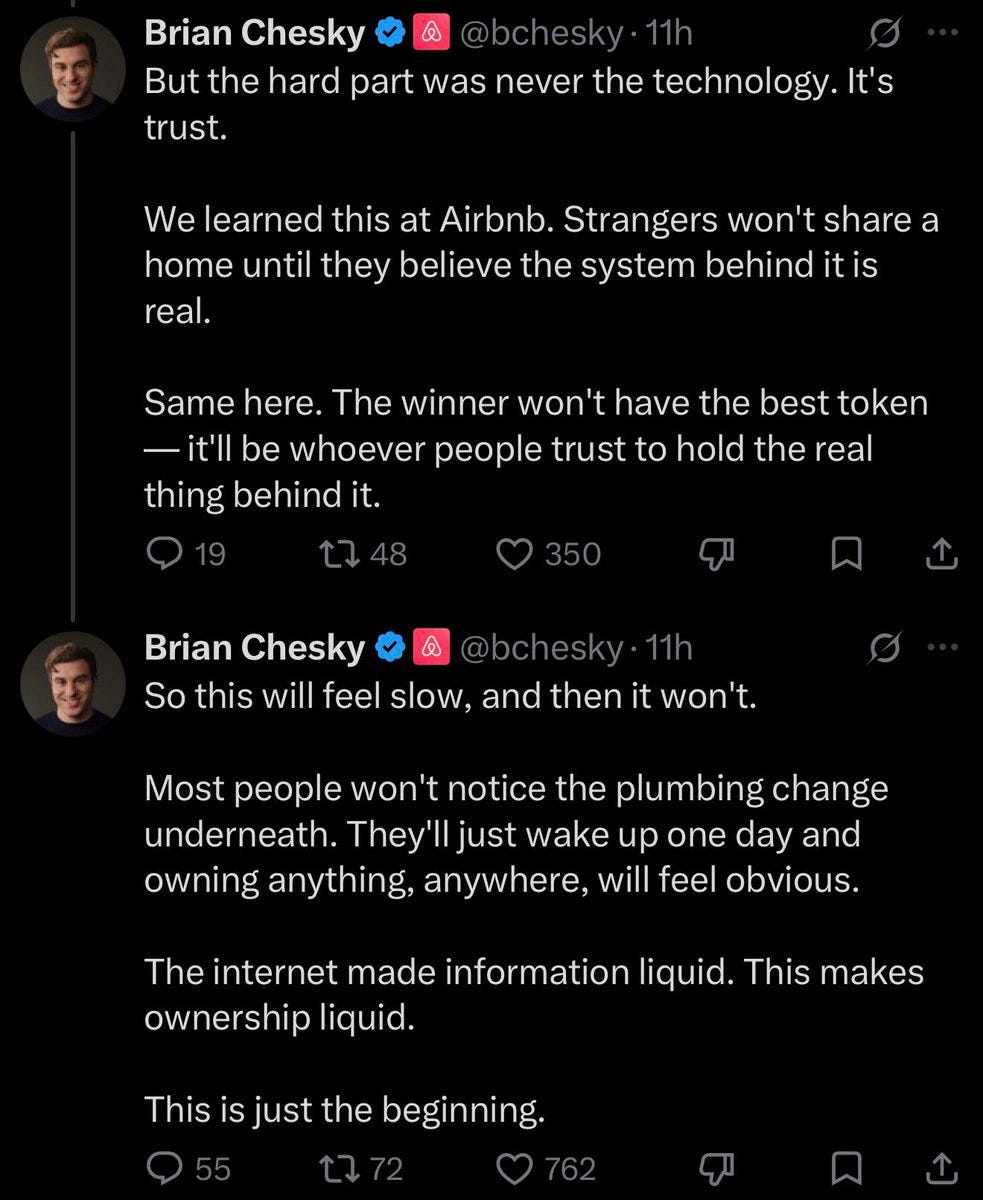
It turned out his account was hacked, but we’re seeing a growing anti-AI sentiment when it comes to using AI to create content. People call it ‘slop’.
Here’s the fascinating thing: people prefer AI-generated content before they know it’s AI.
Bynder ran a blind test with 2,000 consumers. 56% preferred the AI-written copy over the human version. Then they told participants it was AI. 52% reduced their engagement immediately.
People aren’t rejecting AI content because the writing is bad. They’re rejecting it because it feels like you outsourced the thinking. It’s inauthentic. Instead of reading your perspective, you could have just handed them a Claude prompt.
This is the problem with the AI content systems I’ve seen. The system attempts to automate both the typing and thinking.
What people call AI slop is just great writing patterns done at scale. Great copywriters used these patterns for decades. AI regurgitates them at scale.
The patterns aren’t ‘slop’. The patterns are ‘saturated’. Too much of anything becomes irritating. People want originality.
But AI is producing more ‘slop’, just not in the way everyone talks about.
The ‘slop is the perfectly structured post and zero original insight.
A great post needs a genuine idea, something interesting to say. If you have that, perfect writing doesn’t matter. It can be rough around the edges. The problem is, people are using AI to produce saturated patterns without any quality of thinking.
AI is making them lazy. They’re using AI as a copy-and-paste tool. The perfect AI content system still puts the majority of the work on the human.
And this is why the AI content systems that win help the person to craft content with better insights, opinions, points of views that resonate with their audience.
The worst AI content systems cause the person to skip both the typing and thinking.
The ‘Tasty’ AI Content System
To show this, I’m going to show one skill of the updated version of my “Tasty” AI content system. Soon to be released.
The system acts like a content team, available to use in ChatGPT or Claude, with all context kept in a shared layer that is continually updated so no matter where you choose to work, the AI assistant always has your context.
For this post, I’m going to show one of my favourite skills from the system because it highlights the difference in AI helping you craft real content vs. AI creating real slop.
AI for Content Ideation:
This is one of my favorite things to do at the start of the week. I type “give me content ideas,” and the skill does the rest. It loads my audience profile, checks my winning patterns for each platform, then goes out and researches what is trending across Reddit, X, and the web. What comes back is a ranked list split into two sections: ideas mapped to patterns that already work for me, and ideas riding a live trend. Those I like I add to my content queue (claude/chatgpt artifact). Here is how it works.
Step 1 - Load Context: The first thing the skill does is load my content audience profile. This is not an ideal customer profile. An ICP tells you who to sell to. A content audience profile tells you how to create content that people actually react to.
I built mine using a skill called the Content Audience Profiler. It goes out and researches the person you are creating content for. It reviews their footprint on the web, on social, and looks at the creators they are already consuming content from. Then it builds a detailed profile from all of that. I update it every month based on what is actually performing. A small example of what the profile includes:
Their default emotional state: Cautiously impatient. They believe AI is real and important, but they have been lied to enough times by vendors, consultants, and content creators that their default is mild skepticism until proven otherwise. They are not cynical. They are evidence-hungry.
Validation hooks: “You have read a hundred posts about AI in marketing. Most of them were written by people who have never had to hit a pipeline number.” / “Your team says they are using AI. You are not sure you believe them.”
It arms your research skill with the freshest context of your audience’s content consumption habits and what stops them from scrolling.
The second thing the skill loads is my winning platform patterns. This is where it gets interesting.
I have a skill called Learn What Wins. You feed it your past content and performance data, and it figures out the patterns behind what actually works for you. Not what works in general. What works for you, on your specific platform, with your specific audience.
My LinkedIn profile is built from 160 posts over a single year. All of the content. All of the performance data. Ranked by engagement. The same for Substack. The same for YouTube, including full transcripts. Here’s a sample of what the LinkedIn patterns look like:
Top patterns ranked by engagement
News drop and your take
Builder story (on the ground, shipping, practical)
Numbered how-to with clear outcomes
Identity reckoning (”how this role will change”)
Comedy / satire
Contrarian take (”why people are wrong about X”)
Confidence notes: Builder story is trending up over the last 3 months. News drop and your take may be trending down. Comedy has not been tested recently.
The key insight here is that the skill maps ideas to patterns, not specific topics. It is not regurgitating old posts. It is finding new ideas that fit into structural formats that have already earned engagement.
If I ask for ideas across all platforms, it checks all the winning profiles. If I say “give me Substack ideas,” it only checks my Substack patterns. If I say “LinkedIn,” it only checks LinkedIn. The ideas come back engineered for the platform I am trying to grow.
And this data does not go stale. I log my results every month, and the patterns update. What works shifts over time. Builder stories are climbing for me right now. News drops are cooling off. The system sees that and adjusts.
Step 2 - Research Driven by Context Above: Now that the skill knows my audience and what patterns win, it goes out and researches what is happening right now.
This is the part that makes the ideas timely, not just structurally sound. The skill connects to MCP servers that search across the platforms where my audience is already consuming content. Reddit, X, the web. You can add whatever platforms make sense for your audience. It searches the last 30 days for conversations, viral threads, and emerging takes in the topics my audience cares about.
And because it already loaded my audience profile and winning patterns, it knows exactly what to look for.
Step 3 - Match & Rank: What comes back is split into two sections.
The first is Proven for you. These are ideas mapped directly to patterns that have already worked for me. Every idea tells me which platform it is recommended for, which pattern it maps to, and why the system thinks it would work. You can see idea 3 here, “Yes, you are behind,” mapped to Identity Reckoning on LinkedIn. 610 likes, 50 replies on the source post. Idea 6, “One agent won’t get you to real work,” mapped to News-drop + Your Take. 2,618 likes on the source. These are not random suggestions. They are engineered to fit formats that have already earned engagement.
The second is Trending upside. These are ideas pulled from live conversations happening right now across the platforms my audience is consuming content from. Idea 8, “Data fragmentation is the real agent bottleneck,” came from Box CEO, Levie’s viral thread with 1,961 likes. Idea 10, “McKinsey: agents could power two thirds of marketing,” is a clean Data Nugget with a built-in action framework. The system found these because they are trending in my audience’s world and they map to patterns I know how to execute.
The system scores and saves them in my content queue. Stored context I can always view weather I’m in ChatGPT or Claude.
Don’t do the lazy AI thing. James Clear said in Atomic Habits - “You do not rise to the level of your goals. You fall to the level of your systems." Your systems really matter.
Until Next Time,
Happy AI’fying
Kieran Flanagan


