


I’ve hired hundreds of marketers and growth professionals. Great leaders excel at hiring. It’s not just about sourcing, interviewing, or hiring. It’s about staying ahead of the curve on the skills you hire for.
A lot of the job descriptions I’ve used would need rewriting today.
Look at who Ramp brought into a marketing brainstorm: someone who had spent four years leading social for MrBeast. They ended up putting Brian Baumgartner, Kevin from The Office, in a glass box in New York doing expense reports.
ClickUp pays comedians and outside creators to join its writers’ rooms and improve its scripts.
These are software companies recruiting people who understand entertainment.
In 2021, I led HubSpot’s acquisition of The Hustle because we saw this trend. Make relevant content, not just educational.
Now, AI has commoditized so much of what we used to do. It can produce an infinite number of articles, videos, and campaigns. Your competitors have access to the same tools—the same models. You don’t even need to be a great prompter to get AI to produce pretty good results.
AI is commoditizing the consideration phase. And that changes where I’d spend my hiring budget.
I’d want people who can make our product interesting enough to watch. People who understand what our customers send to their friends. People who can convince creators with great audiences to build something with us.
When marketing moved to digital, everything became more professional. Optimized to the very last metric. It lost its edge, soul, and personality.
The battle is now in the awareness stage. To win, I’d make these three roles a critical part of my team.
Quick note: I’m going to be posting every two weeks for the rest of this year. I took on some new things. Became a best selling author. And finally reached 100k subs on YouTube. In doing all that, I need to fix my workload and I want to ensure quality is very high.
1. Viral Producer
What is it?
Someone who runs experiments that get us known. That help us win the stage above consideration → Awareness.
They take a problem our product solves and turn it into something people want to watch, participate in, or talk about. They own getting the idea made, getting it distributed, and deciding whether it deserves another investment.
Why now?
In PLG businesses, we built strong experimentation teams around sign-ups, activation, and conversion. I want that same discipline applied earlier, to awareness.
As buyers do more of their research inside AI assistants, I think being familiar before they start comparing products becomes more critical.
At the same time, AI makes parts of creative production cheaper. We can test more concepts before committing to a big production. That creates room for someone who combines a growth operator’s appetite for experiments with a producer’s ability to make things people care about.
Example
Ramp sells finance software. They put Kevin from The Office in a glass box in New York and made him process receipts by hand while a tracker compared him with Ramp.
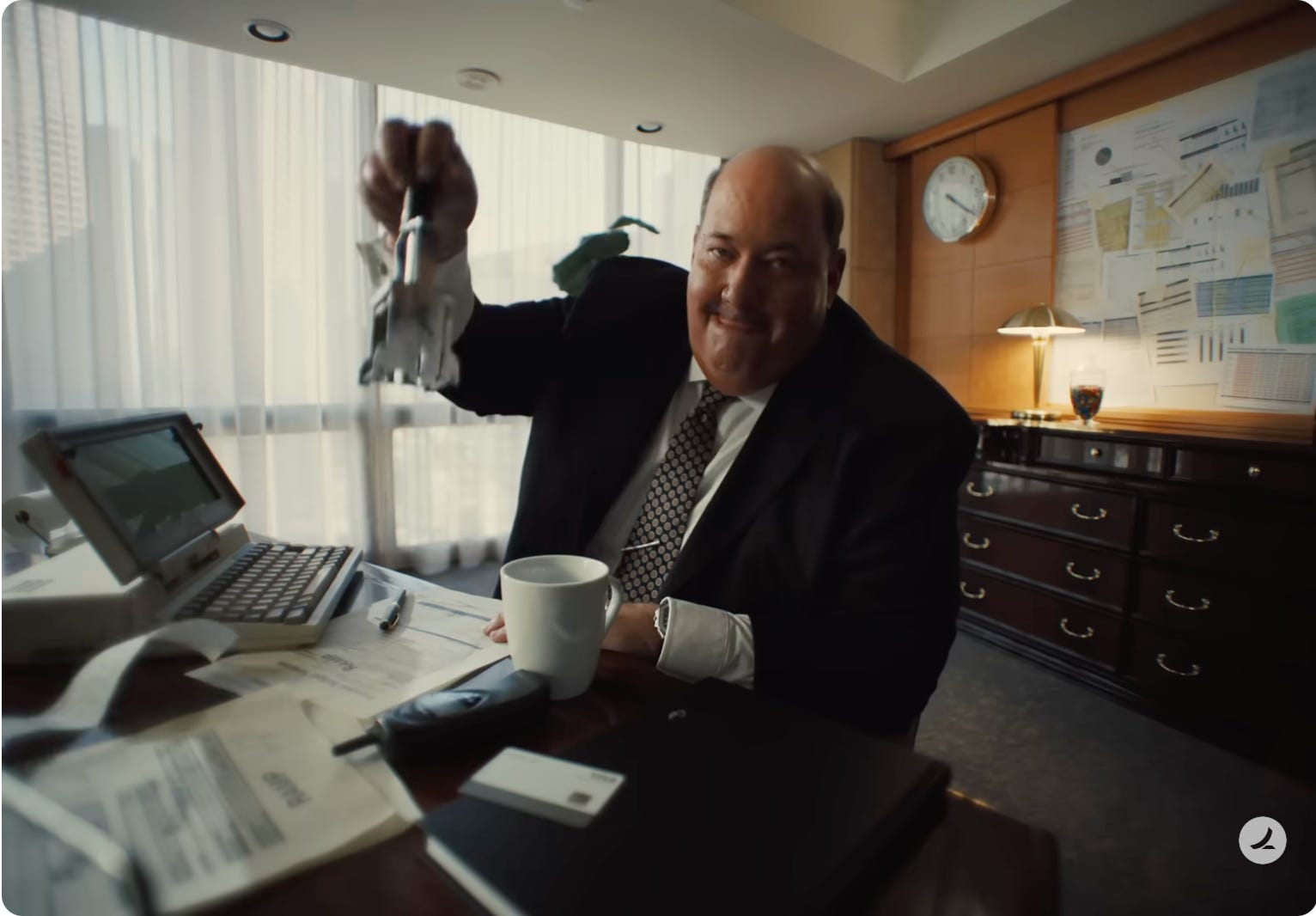
Then came a partnership with Kumar, a retired-accountant character whose finance videos look like thriller trailers. And a Broadway musical about paying bills, starring Billy Porter.
This is the range of work I mean by a Viral Producer.
How it works
Ramp has a dedicated Creative Experimentation team reporting into growth marketing. Its current roster includes:
Kendall Tucker, Director of Creative Experimentation.
Three senior creative producers: Amber Layne, Mads Montana and Nolan Lunsford. Their backgrounds include acting, comedy, dance and YouTube entertainment.
Dallas Thompson, Influencer Manager.
Robert Lipman, Visibility Engineer.
A rotating group of freelance producers, directors, comedians and other talent.
The team owns the idea, execution and clips, and measures views, shares and downstream impact.
2. Internet Comedian
What is it?
Someone who makes your brand something customers send to their friends.
That could mean memes, short sketches, recurring characters, or an AI remix of a trend. They understand internet culture.
Why now?
Social is the new SEO
In the inbound era, you scaled via keywords and content. Now, you scale through memes and shit posting.
Basically, you have to be relevant online. The early-stage founders I speak with, pre-seed, seed, and series A, are more marketing than engineering. And they understand you need to do things differently online.
Check out this from a company called Monid.ai, whose co-founder Shengkun I met earlier this week. Their product is great. Their marketing is also great.

AI gives that person more ways to execute. They can mock up a character, edit a clip, or try several versions quickly. The valuable skill is having taste and judgment to know what would be funny in the first place.
And we’ve done this before. In 1957, Jim Henson was making puppet commercials for Wilkins Coffee. In one, a puppet refuses the coffee and gets shot with a cannon. Watch it here.
Imagine getting that through your brand review today. We’ve lost our edge.
We have better production tools than ever, and so much B2B marketing still sounds like a corporate induction.
Example
Look at how Alexandr Wang promoted Muse.
Meta’s chief AI officer turned its fluffy mascot into material for memes, pop-culture references and jokes about competitors. Business Insider counted more than 300 posts on X between Muse’s launch on September 8 and its September 23 report. Source
When someone complimented his social team, Wang said he was posting himself:
“I don’t let the corposlops near my tweet cannon.” Source
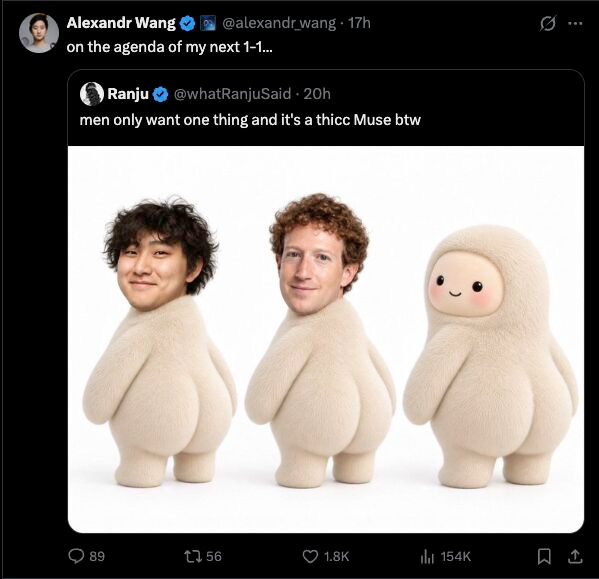
That’s the instinct you need in an Internet Comedian. Someone who sees what people are already laughing about and knows how to put our product into the joke. Obviously Alex Wang is much more than an internet comedian lol
ClickUp has built a more formal process around this. It pays comedians and outside creators to join writers’ rooms, bring ideas, and improve scripts.
How it works
This is simple: you either can do this content or you can’t. You either have this skill in-house, or you don’t.
Hire a comedic script writer. Do a contract to try it out. Look for young, out-of-college grads who understand how to create content people share.
Pay a comedy writer or creator to turn those observations into five premises. Produce a few simple versions before commissioning anything expensive.
3. Creator Deal Maker
What is it?
Someone who makes the creators your customers follow want to work with you.
They find the right talent, understand what those creators want to build and put together an offer worth accepting.
Why now?
If a creator is a good fit for your company, they’re probably a good fit for several others.
You need a reason for them to choose you and stay. That might include money, production support, access, distribution or a project they couldn’t easily make alone.
This takes commercial judgement and relationship skills. A standard sponsorship email only gets you so far.
Example
At HubSpot, one of the things we did in our creator programme was cross-promote the creators.
Being part of the programme helped them grow their own audiences. We had something valuable to offer beyond the sponsorship fee, and a reason for them to keep participating.
We also bought half their ad inventory for 2 years, locking them into long-term deals meant they had predictability on their revenue, and we got the upside on their audience growth as we had locked in the CPM cost. For example, one of our creators grew their audience 5x during those 2 years, and that was all free visibility for us.
That’s the kind of deal I’d want this person to figure out: what can we offer that becomes more valuable the longer we work together?
How it works
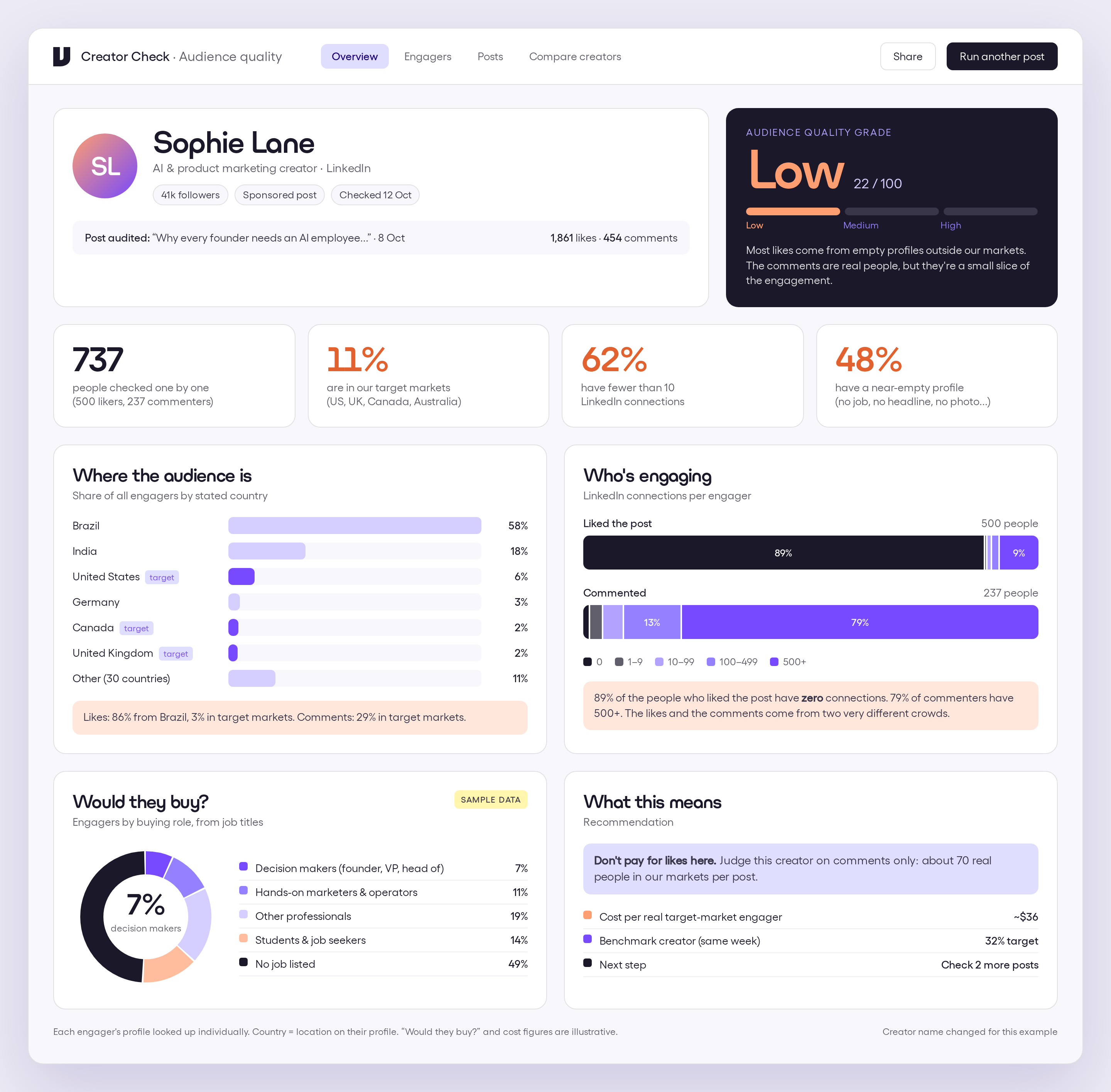
First, check who actually engages with the creator. Look at relevant job roles, markets and the quality of the conversations.
I built a creator grader to help with this. In one case, roughly 80% of the engaging profiles I examined had no connections and looked newly created. That was a reason to investigate before paying. A big engagement number can hide a poor audience.
Then ask what the creator wants to build. Match that ambition with something your company can genuinely provide.
Start with a paid three-part pilot. Agree the fee, creative control, usage rights and what would justify continuing.
I’d look for someone who can explain both sides of the deal: why it works for our business, and why the creator would choose it over another offer.
Before opening your next marketing role, put a small budget behind one of these experiments.
Commission an entertaining product concept. Bring a comedian into a writing session. Build an offer for a creator you’d love to work with.
You’ll learn far more about the skills your team is missing by making something together than by rewriting the same job description you used last year.
Until Next Time,
Happy AI;fying
So we’re just bracing for the whole of social content - now including B2B - to be A/B tested into Sydney Sweeney naked, bar stool jokes, celebrities fake beefs etc. like Seth Godin predicted - helped along by marketing teams finally freed from the need of doing boring SEO stuff. It’s going to be… interesting 🤨